

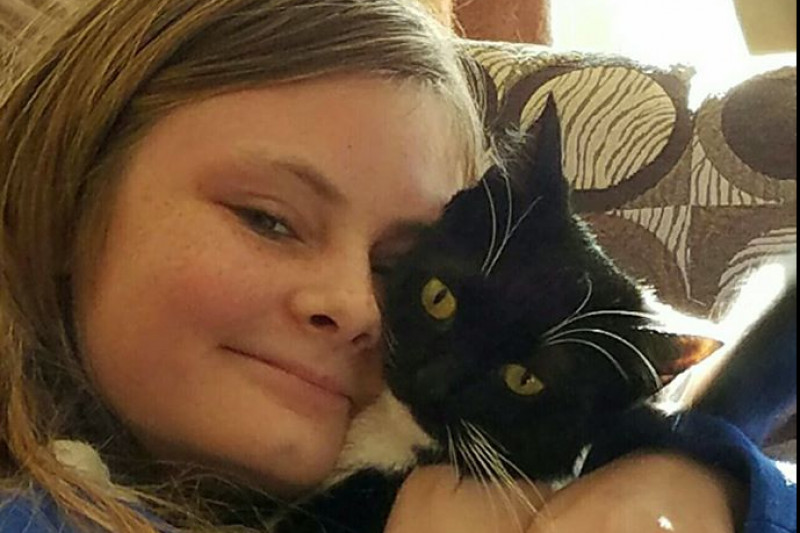
What? You’ve never heard of this condition? Well, neither had I, which is what makes having an awareness month so important. I learned about this debilitating disease when my friend’s daughter was diagnosed after 4 months of intermittent issues with severe vertigo, seizures, panic attacks, severe joint pain, chest pain and double vision. It was good to finally have a diagnosis, but at 15 to now have to deal with an autoimmune disorder is both difficult and stressful. Andrea, Zoe, and Zoe’s brother Aaron are champions, who have dealt with this situation with strength, grace and gratitude. Even though this disease is chronic, symptoms can be managed. Many people live with symptoms without getting properly diagnosed, which is why awareness is so important.
How is Zoe doing? She is on her road to recovery after months at Connecticut’s Children Medical Center (CCMC). Zoe’s case is rare due to her age and the added complication of cancer. MG is linked to an abnormally functioning thymus gland. In rare cases there is a tumor on the thymus and even rarer when the tumor, a “Thymoma”, is cancerous. In Zoe’s case, she was found to have a Thymoma which was discovered with a CT scan and contributed to her diagnosis with MG. This whole experience has caused a lot of anxiety for Zoe. Thanks to the Make a Wish Foundation, Zoe will be receiving a service dog to help with anxiety. Make a Wish Foundation is an amazing organization!
Want to know more about Myasthenia Gravis, check out http://www.myasthenia.org/
Below is information from the MG website’s PR Toolkit:
What is Myasthenia Gravis (MG)?
Myasthenia gravis, or MG, is a disorder causing extreme muscles weakness of voluntary muscles of the body. The name means “grave muscle weakness,” and symptoms may include difficulty chewing, swallowing and breathing, blurred vision, and chronic muscle fatigue. MG affects people of all races, genders and ages.
Facts about MG
-
Myasthenia Gravis is a disorder causing extreme muscle weakness that can impact a person’s ability to see, walk, talk, breathe and even smile.
-
Myasthenia gravis is a rare, non-contagious condition that affects people of all races, genders and ages, and is typically not inherited.
-
The degree of muscle weakness can vary from person to person, and day to day.
-
Common symptoms of MG may include: drooping eyelids, blurred or double vision, slurred speech, difficulty chewing and swallowing, weakness in the arms and legs, chronic muscle fatigue, and difficulty breathing.
-
Due to the high number of misdiagnoses, the precise number of people with MG is unknown, but MG is estimated to affect approximately 100,000 Americans.
-
To diagnose myasthenia gravis, your doctor will review your symptoms and medical history, and may conduct several tests, including muscle strength tests and imaging scans.
-
There are effective treatments, but there is currently no cure for MG, and although rare today, it can prove fatal.
-
Some effective treatments include medicines and surgeries that allow many MG patients to lead full lives with significant improvement in their muscle weakness. However, about 10-15% of those with MG are considered “refractory” meaning current treatments do not work for them.
-
Get involved! Find a walk: http://www.mgwalk.org/
Get involved! Spread the word!

 Finding Abilities